
Last Updated on February 10, 2026
Do you know how to backtest forex strategies with brokers? Now. backtest forex strategies with brokers is the smartest way traders can evaluate, improve, and trust their trading ideas before risking real money in the live market. In 2026, with more advanced broker platforms, deeper historical data, and improved simulation accuracy, backtesting has become a non-negotiable step for both beginner and professional forex traders.
Backtesting allows traders to apply a defined forex strategy to historical price data and measure how it would have performed under real market conditions. When you backtest forex strategies with brokers, you benefit from broker-grade data, realistic spreads, commissions, execution speed, and trading rules that closely mirror live trading environments. This helps eliminate guesswork and emotional trading decisions.
This updated 2026 guide explains how to backtest forex strategies with brokers step by step, the tools brokers now offer, best practices that align with current market realities, common mistakes to avoid, and how to turn backtesting results into a profitable trading plan. The goal is simple: help traders make data-driven decisions and build sustainable forex strategies.
What Does It Mean to Backtest Forex Strategies?
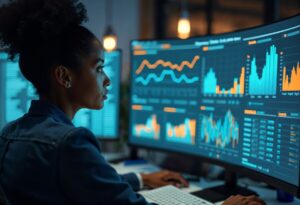
Backtesting forex strategies is the process of testing a trading strategy on historical market data to evaluate its performance over a specific period. Instead of trading live, traders simulate trades based on predefined rules and observe outcomes such as profits, losses, drawdowns, and consistency.
When traders backtest forex strategies with brokers, they use broker-provided trading platforms and historical data to recreate real trading conditions. This includes:
- Historical price movements
- Spread and commission costs
- Slippage and execution delays
- Margin and leverage rules
Backtesting helps traders understand how a strategy reacts to different market conditions such as trends, ranges, high volatility news periods, and low-liquidity sessions.
Why Backtest Forex Strategies With Brokers?
Brokers play a critical role in effective backtesting because they provide the infrastructure and data that reflect actual market behavior. Below are the main reasons traders should backtest forex strategies with brokers instead of relying on third-party tools alone.
Key Advantages of Broker-Based Backtesting
| Advantage | Why It Matters |
| Accurate Historical Data | Broker data reflects real pricing and liquidity conditions |
| Realistic Trading Costs | Includes spreads, commissions, and swaps |
| Platform Integration | No need to export or import external data |
| Strategy Optimization | Easy parameter adjustment and performance testing |
| Faster Execution | Built-in strategy testers save time |
By using broker platforms, traders avoid unrealistic assumptions that often lead to poor live trading results.
Step-by-Step Guide: How to Backtest Forex Strategies with Brokers
Step 1: Choose a Broker With Advanced Backtesting Tools
The first step to backtest forex strategies with brokers is selecting a reliable broker that offers professional-grade trading platforms. In 2026, the most commonly used platforms include:
- MetaTrader 4 (MT4)
- MetaTrader 5 (MT5)
- cTrader
- Proprietary broker platforms with AI-assisted testing
When choosing a broker, ensure the platform supports:
- Strategy tester or simulation tools
- Custom indicators and Expert Advisors (EAs)
- Multiple timeframes and currency pairs
- High-quality historical data
Step 2: Define Your Forex Trading Strategy Clearly
Before running any backtest, your strategy must be clearly defined. Vague rules produce unreliable results. A solid strategy definition should include:
- Entry conditions (technical or price-based)
- Exit rules (profit targets and stop-loss levels)
- Risk per trade (percentage or fixed amount)
- Trade management rules (trailing stops, break-even logic)
- Trading sessions and days
Clear rules ensure your backtesting results are consistent and repeatable.
Step 3: Access and Prepare Historical Data
To backtest forex strategies with brokers accurately, select historical data that matches your trading style.
| Trading Style | Recommended Timeframe |
| Scalping | 1-minute to 5-minute charts |
| Day Trading | 15-minute to 1-hour charts |
| Swing Trading | 4-hour to daily charts |
| Position Trading | Daily to weekly charts |
Always test over a long enough period to capture different market cycles. A minimum of 1–3 years is recommended for most strategies.
Step 4: Use the Strategy Tester Tool
Most broker platforms provide a built-in strategy tester that allows traders to automate the backtesting process.
To begin:
- Open the Strategy Tester on your broker’s platform
- Select the trading strategy or Expert Advisor
- Choose the currency pair and timeframe
- Set the historical date range
- Apply realistic spread and commission settings
- Run the backtest
The platform will simulate trades exactly as they would occur in live market conditions.
Step 5: Analyze Backtesting Results
After you backtest forex strategies with brokers, the most important step is analysis. Do not focus on profit alone. Instead, review multiple performance metrics.
Key Metrics to Evaluate
- Win rate: Percentage of profitable trades
- Risk-to-reward ratio: Average win versus average loss
- Maximum drawdown: Largest equity decline
- Profit factor: Gross profit divided by gross loss
- Trade frequency: Number of trades per month
A strategy with moderate profits and low drawdown is often more sustainable than one with high returns and large risk exposure.
How Professional Traders Interpret Backtesting Data for Real-World Performance
Backtesting does not end when the results appear on the screen. Professional traders understand that numbers alone are meaningless without proper interpretation. When traders backtest forex strategies with brokers, the real advantage comes from knowing how to read performance data in a way that reflects live market behavior.
1. Focus on Consistency, Not Isolated Profits
Experienced traders prioritize stable performance over occasional profit spikes.
They look for strategies that:
- Produce returns across multiple market cycles
- Perform well over long testing periods
- Avoid extreme equity swings
A strategy that performs consistently under broker-based conditions is more likely to survive real trading environments.
2. Analyze Drawdown Behavior Before Profit
Drawdown reveals how a strategy behaves during losing periods.
Professionals assess:
- Maximum drawdown depth
- Length of drawdown recovery
- Frequency of consecutive losses
When you backtest forex strategies with brokers, realistic drawdown analysis helps determine whether the strategy matches your risk tolerance and psychological capacity.
3. Examine Trade Distribution and Profit Sources
Not all profitable strategies are reliable.
Advanced traders check:
- Whether profits come from many small wins or a few large trades
- If losses are controlled and predictable
- How trade outcomes are distributed over time
Strategies dependent on rare oversized wins often fail under live broker execution conditions.
4. Identify Market Conditions That Favor the Strategy
Professional traders do not trade all market environments blindly.
During backtesting, they identify:
- Trend-friendly periods
- Ranging or sideways markets
- High-volatility news sessions
This allows traders to define clear market filters, improving real-world execution accuracy.
5. Measure Risk Efficiency, Not Just Returns
High profits mean little if risk exposure is excessive.
Experts evaluate:
- Risk-to-reward stability
- Capital preservation during losing streaks
- Equity curve smoothness
When traders backtest forex strategies with brokers using realistic position sizing, they gain insight into long-term sustainability.
6. Validate Results Through Repeat Testing
One test is never enough.
Professional traders:
- Retest strategies on different data ranges
- Use multiple currency pairs
- Compare results across timeframes
This reduces curve fitting and increases confidence before moving to demo or live trading.
Why This Interpretation Stage Matters
Backtesting becomes powerful only when results are interpreted correctly. Traders who skip this step often fail despite promising data. By applying professional evaluation techniques, traders transform raw statistics into actionable insights that align with real broker conditions.
Best Practices for Backtesting Forex Strategies in 2026
Test Across Different Market Conditions
Markets evolve constantly. To build robust systems, traders should backtest forex strategies with brokers across:
- Trending markets
- Ranging markets
- High-volatility periods
- News-driven sessions
This ensures the strategy does not rely on a single market condition.
Use Multiple Timeframes
Testing the same strategy on different timeframes helps identify its strengths and limitations. A strategy that works only on one timeframe may lack flexibility.
Include All Trading Costs
Ignoring costs leads to unrealistic expectations. Always include:
- Spreads
- Commissions
- Swap fees
- Slippage
Broker-based backtesting automatically accounts for most of these costs.
Avoid Over-Optimization
Over-optimization occurs when a strategy is excessively adjusted to fit past data. This often leads to failure in live markets. Keep rules simple and focus on consistency rather than perfection.
Combine Manual and Automated Backtesting
- Manual backtesting improves market understanding
- Automated backtesting improves speed and accuracy
Using both methods provides deeper insight into strategy behavior.
Common Mistakes Traders Make When Backtesting
| Mistake | Why It’s Risky |
| Using limited data | Misses different market cycles |
| Ignoring drawdown | Leads to emotional trading |
| Overfitting strategies | Poor live performance |
| Testing unrealistic lot sizes | Misrepresents real risk |
| Changing rules mid-test | Invalidates results |
Avoiding these mistakes significantly improves strategy reliability.
Benefits of Backtesting Forex Strategies With Brokers
Backtesting offers long-term advantages that go beyond profit measurement.
- Builds confidence before live trading
- Identifies weaknesses early
- Improves discipline and rule-following
- Saves money by avoiding poor strategies
- Enhances risk management skills
When traders backtest forex strategies with brokers consistently, they approach the market with clarity instead of emotion.
Turning Backtesting Results Into a Live Trading Plan
Once a strategy passes backtesting, the next step is forward testing using a demo account. This bridges the gap between historical simulation and live execution.
A complete trading plan should include:
- Backtested strategy rules
- Risk management framework
- Maximum acceptable drawdown
- Monthly performance goals
- Trading journal process
This structured approach increases long-term consistency.
Limitations of Backtesting Forex Strategies
While backtesting is powerful, it has limitations:
- Past performance does not guarantee future results
- Market structure can change
- Broker conditions may evolve
Understanding these limitations helps traders use backtesting as a guide, not a guarantee.
FAQs
1. What is the best way to backtest forex strategies with brokers?
The best way is to use broker platforms like MT4, MT5, or cTrader with built-in strategy testers, realistic spreads, and high-quality historical data.
2. How accurate is broker-based forex backtesting?
Broker-based backtesting is more accurate because it includes real trading conditions such as spreads, commissions, slippage, and execution rules.
3. How much historical data should you use for forex backtesting?
Most traders use at least 1–3 years of historical data to test strategies across different market conditions and improve reliability.
4. Can beginners backtest forex strategies with brokers?
Yes, beginners can start by using demo accounts and built-in strategy tester tools to simulate trades without risking real money.
5. Does backtesting guarantee future forex profits?
No, backtesting only shows how a strategy performed in the past; market conditions change, so results are not guaranteed in live trading.
Conclusion
Learning how to backtest forex strategies with brokers is one of the most important skills a trader can develop in 2026. Backtesting transforms trading from speculation into a structured, data-driven process.
By using broker-provided platforms, realistic historical data, and disciplined testing methods, traders can refine strategies, manage risk effectively, and trade with confidence. The goal is not to find a perfect system but to build a reliable strategy that performs consistently across changing market conditions.
Start to backtest forex strategies with brokers today, apply the insights wisely, and position yourself for long-term success in the forex market.